
Croissants may look well-shaped after lamination and forming, but problems can still appear during final proofing.
Some products expand unevenly, while others lose their shape or begin leaking butter before baking.
The challenge is to develop sufficient fermentation without compromising the stability of the laminated layers.
Why Is Proofing Temperature Important?
During proofing, yeast produces carbon dioxide, allowing the dough to expand.
At the same time, the fat layers must remain sufficiently stable to preserve separation between the dough sheets.
If the proofing temperature is too high for the selected butter or laminating fat, the fat may soften excessively and migrate between layers.
This can reduce layer definition and contribute to leakage or poor expansion during baking.
For some butter-based croissant processes, temperatures around 24–27°C are used as a reference, but the suitable range depends on the formulation and fat characteristics.
What Happens When Croissants Are Underproofed?
Insufficient proofing can produce croissants with limited volume and a dense internal structure.
The dough may not have developed enough gas and extensibility to support the expected expansion during baking.
However, proofing time alone is not a reliable indicator.
Yeast activity, dough temperature, product size, and formulation all affect the required fermentation period.
Why Does Humidity Matter?
Humidity helps prevent excessive drying of the dough surface during proofing.
If the surface becomes too dry, a firm skin may develop and restrict expansion.
Excessive moisture, on the other hand, can create unwanted surface conditions.
The goal is to maintain an environment that supports fermentation while preserving the product's shape and surface quality.
How Does This Affect Automated Production?
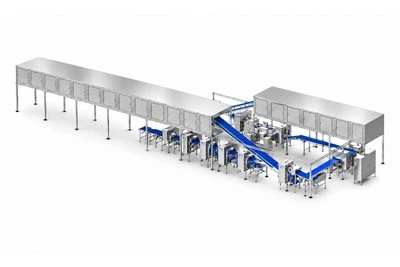
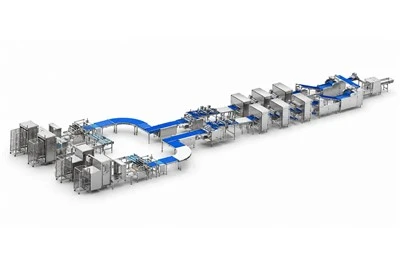
In a Croissant Production Line, proofing must remain coordinated with upstream forming and downstream baking.
Inconsistent proofing conditions may lead to differences in product volume, shape, and internal structure.
Manufacturers should monitor temperature, humidity, dough expansion, and product condition rather than relying on a fixed proofing time.
Stable operation of a Croissant Production Line requires repeatable conditions throughout these stages.