
A muffin should develop the shape, height, and texture expected from its formulation. However, some batches come out with flat tops instead of the rounded domes manufacturers are looking for.
When this happens, adding more baking powder may seem like the easiest solution. But flat muffins can result from several interacting factors, including actual oven temperature, batter consistency, depositing accuracy, and heat distribution.
For manufacturers, identifying the underlying cause is more effective than changing the recipe without checking the production process.
1. Check the Actual Oven Temperature
Oven temperature is one of the first factors to investigate when muffins consistently fail to rise as expected.
A controller may display the target temperature without accurately reflecting conditions throughout the baking chamber. Sensor location, calibration, heat recovery, and differences between oven zones can all affect the heat received by the product.
If the initial heat input is insufficient, batter expansion and structural setting may not occur in the desired sequence. However, simply increasing the temperature is not always the right solution: excessive heat can cause premature surface browning or uneven baking.
What to check:
Compare the controller setpoint with measured oven temperatures.
Check for temperature differences between relevant oven zones.
Observe the product during the initial baking stage.
Evaluate the finished muffin's height, color, and internal texture.
These checks help determine whether the problem is related to the temperature setting, heat distribution, or another part of the process.
2. Evaluate Batter Formulation and Consistency
Batter composition influences both gas production and the ability of the structure to retain gas during baking.
The balance of flour, liquid, sugar, fat, eggs, and leavening agents affects batter viscosity, aeration, and structural development. Changes in ingredient proportions or mixing conditions may therefore alter how the batter deposits and expands.
Too much leavening agent does not necessarily produce a taller muffin. Excessive gas production or an unsuitable batter structure can contribute to uneven expansion and a weaker finished product.
Manufacturers should check whether the formulation and mixing process are consistent before making adjustments to the leavening agent.
For industrial production, maintaining repeatable batter properties is particularly important because the same mixture must perform consistently throughout a production run.
3. Check Depositing Weight and Mold Filling
Even when the batter and oven conditions are suitable, inconsistent depositing can produce muffins with different heights and shapes.
A portion that contains less batter has less material available to expand. Variations in deposited weight can therefore create visible differences between products baked on the same tray or conveyor.
Mold dimensions and filling levels also affect the final appearance. A product designed to develop a pronounced dome may require a different depositing specification from one intended to have a flatter top.
What to check:
Verify the target batter weight and actual depositing accuracy.
Check whether filling levels remain consistent across depositing heads.
Confirm that the mold dimensions match the product specification.
Compare finished height with deposited weight across multiple samples.
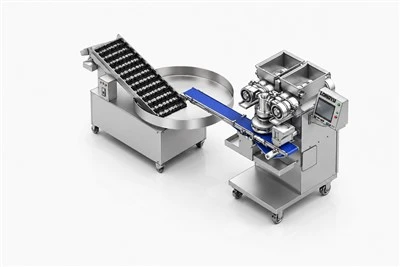
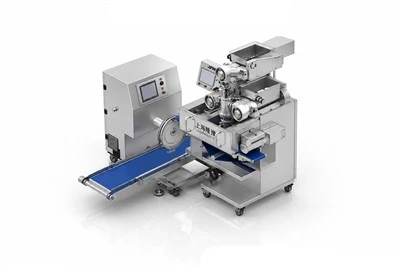
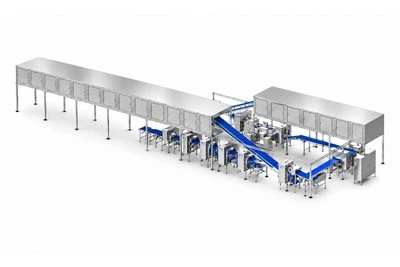
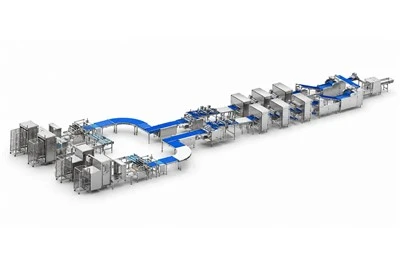
On an automatic muffin production line, accurate depositing helps reduce variation before the product even enters the oven.
4. Investigate Uneven Heat Distribution and Baking Time
A consistent temperature reading does not automatically mean every product receives the same amount of heat.
Differences between oven zones, conveyor position, airflow, loading patterns, and residence time can influence baking results. Products passing through different thermal conditions may develop different heights, colors, or internal textures.
Baking time must also be considered alongside temperature. A profile that produces a good surface appearance may still leave the center underbaked, while excessive exposure can dry the product or darken the surface.
Manufacturers should assess the complete baking cycle rather than changing one parameter in isolation.
For example, if muffins near one side of the conveyor are consistently different from those on the other side, heat distribution and airflow deserve attention before the recipe is changed.
5. A Practical Troubleshooting Sequence for Industrial Production
When flat muffins appear repeatedly, a structured investigation can help narrow down the cause.
Step 1: Confirm the symptom. Determine whether all muffins are flat or whether the issue occurs only in certain positions, batches, or production periods.
Step 2: Verify the batter. Check formulation, mixing consistency, and batter condition before depositing.
Step 3: Inspect depositing accuracy. Compare portion weights and filling levels across the relevant depositing heads.
Step 4: Measure oven conditions. Check actual temperatures, zone differences, and conveyor residence time.
Step 5: Change one variable at a time. Run controlled trials and compare product height, color, internal texture, and baking completion.
This sequence helps manufacturers distinguish formulation problems from equipment or process-control issues. It also reduces the risk of introducing new quality problems while attempting to fix the original one.
Conclusion
Flat muffins are not always the result of insufficient baking powder. The cause may lie in oven temperature, batter consistency, depositing accuracy, or uneven heat distribution.
For manufacturers using an automatic muffin production line, consistent product quality starts with identifying which part of the process is responsible for the variation.
Diagnose the process first. Adjust the recipe only when the evidence supports it.