
Why Does Bread Dough Become Sticky After Mixing Too Long?
When dough still feels weak, the instinctive solution is often:
Keep mixing.
But bread dough does not become better indefinitely.
Mixing develops the gluten network, but after the dough reaches the development required by the product, excessive mechanical mixing can eventually reduce dough strength and process tolerance.
The result may be a dough that becomes warmer, slacker, stickier, and increasingly difficult to handle.
Under-Mixed vs. Properly Mixed vs. Overmixed
Under-mixed dough has not developed enough structure for its intended process. It may tear easily and lack sufficient strength.
Properly developed dough has the balance of strength and extensibility required for the product.
Overmixed dough can begin losing useful structure. Instead of becoming stronger, it may become increasingly slack and sticky.
This is why "mix longer" is not always the correct solution.
Why Does This Become a Production Problem?
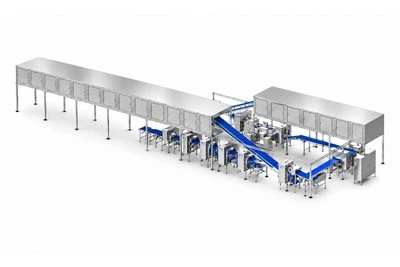
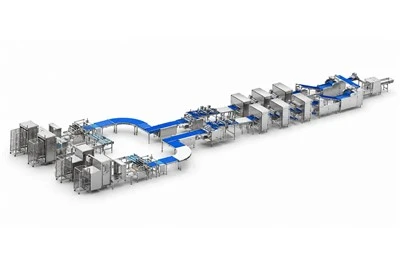
On a Bread Production Line, changes in dough condition can continue downstream.
Sticky or excessively weak dough may become harder to divide and handle consistently. Rounding may become less stable, while forming can become more difficult if the dough cannot maintain the intended shape.
Operators sometimes respond by adjusting the divider, rounder, forming machine, or flour-dusting system.
But the machine may not be the root cause.
The problem visible downstream may have started upstream.
More Automation Requires More Stable Dough
Automatic equipment can repeat mechanical movements very consistently, but it cannot make every batch behave identically if the dough itself changes.
One unstable batch entering a Bread Production Line can affect hundreds or thousands of products.
That is why bakeries should evaluate recipe consistency, mixing condition, temperature, hydration, and fermentation before repeatedly changing downstream machine settings.
Conclusion
The objective of mixing is not to create the strongest possible dough.
It is to deliver the right dough to the next process.
A stable Bread Production Line therefore starts before dividing and forming. Recipe control, mixing, dough condition, and equipment settings need to work together.
Stable dough in. Consistent products out.