
A loaf of sandwich bread may look perfectly baked from the outside, yet slicing reveals a compact band of crumb around the sides. The outer edges contain smaller air cells and feel firmer than the center.
This defect is particularly relevant to pan bread, where the dough expands inside a mold with limited space.
Dense sides in sandwich bread often indicate that dough expansion, pan dimensions, shaping, or proofing conditions are not properly matched.
1. How Does Dough Weight Affect Side Crumb?
The amount of dough placed in a pan determines how much space remains for expansion during proofing and baking.
If the dough weight is too high for the pan, the dough may fill the available space before it has completed its expansion. During baking, the dough continues to expand but encounters resistance from the sidewalls.
This restricted expansion can contribute to a tighter crumb near the edges, especially when the dough is already pressing firmly against the pan before entering the oven.
For lidded sandwich bread, matching dough weight to the pan's capacity is particularly important because both the sidewalls and the lid constrain the loaf's final shape.
Manufacturers should establish a suitable dough-weight specification for each pan size rather than increasing portion weight without validating the finished product.
2. Why Does Shaping Width Matter?
Shaping determines the dough's dimensions and how it is positioned inside the pan.
If the rolled dough is too wide, it may reach the pan's sidewalls too early during proofing. The dough then has less room to expand laterally, which can increase compression around the edges.
Consistent shaping helps distribute the dough more evenly and reduces the likelihood of sections pressing against the mold prematurely.
The required shaping width depends on the pan dimensions, dough weight, shaping method, and expected expansion. A fixed clearance should not be applied to every product without testing.
For industrial production, repeatable molding dimensions help maintain consistent expansion space between batches.
3. Can Overproofing Make the Sides Denser?
Final proofing affects both dough volume and the strength of its internal structure.
If the dough is underproofed, it may still require considerable expansion after entering the oven. If it is overproofed, its structure may become less capable of retaining gas and supporting further expansion.
Inside a pan, these conditions can interact with restricted lateral space. The dough may press against the sidewalls, expand unevenly, or lose volume after baking.
For lidded loaves, proofing is often controlled according to the required dough height relative to the pan. However, the appropriate endpoint depends on the recipe, pan geometry, and intended loaf profile.
Manufacturers should monitor dough condition and volume instead of using a fixed proofing time as the only indicator.
4. How Can Early Crust Formation Affect the Sides?
The initial baking stage influences how the dough expands before its structure becomes fixed.
If oven conditions are unstable or heat transfer varies across the baking chamber, the outer regions may develop differently from the center. This can contribute to differences in crust formation, browning, and crumb texture.
Frequent door opening during the early stage can also disturb oven conditions, particularly in equipment sensitive to temperature recovery.
However, dense side crumb should not automatically be attributed to early crust formation. Excessive dough weight, restricted pan space, and shaping dimensions may be more relevant in some cases.
The correct approach is to inspect the defect's location and appearance, then compare it with pan loading, proofing conditions, and the oven's temperature distribution.
5. How Can Manufacturers Reduce Dense Side Crumb?
A consistent process begins with matching the dough and pan.
Check dough weight: Confirm that each pan receives the specified portion weight for the intended loaf size.
Standardize shaping: Maintain repeatable dough width, thickness, rolling pressure, and placement inside the pan.
Control final proofing: Avoid relying exclusively on time. Evaluate dough volume, condition, and the intended expansion profile.
Verify baking conditions: Check temperature stability, oven loading, and differences between positions in the baking chamber.
Inspect the finished loaf: Compare side crumb, central crumb, crust color, loaf height, and any shrinkage after cooling.
These checks help identify whether dense sides in sandwich bread are associated primarily with restricted space, dough handling, proofing, or baking.
6. Why Does This Matter in Automated Bread Production?
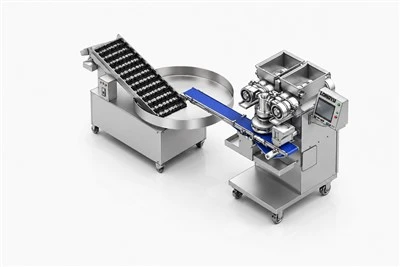
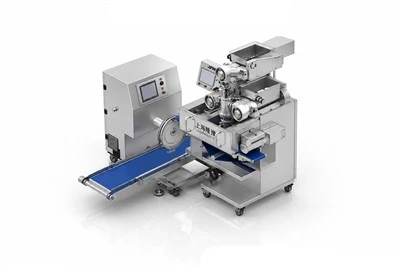
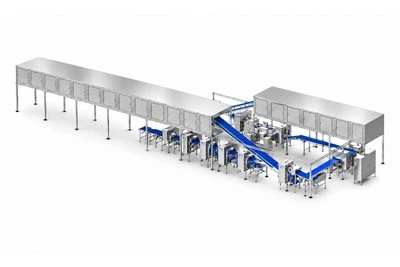
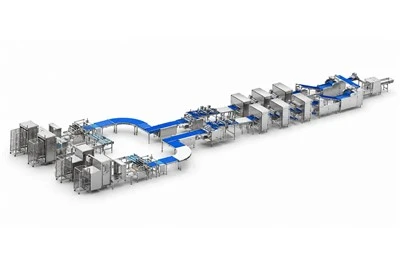
In an automatic bread production line, dough portions may pass through dividing, rounding, molding, panning, proofing, and baking equipment in sequence.
Small variations in dough weight or shaping dimensions can accumulate into visible differences in the finished loaf. When the pan size and dough specifications are not properly matched, these variations can become more noticeable near the sides.
Coordinated production settings help ensure that each dough portion enters the pan in a suitable condition and has the intended space to expand.
For manufacturers producing multiple loaf sizes, each product specification may require its own validated combination of dough weight, pan dimensions, shaping parameters, proofing endpoint, and baking profile.
Conclusion
Dense sides in sandwich bread are often associated with restricted lateral expansion, but the underlying cause may also involve dough weight, shaping dimensions, proofing, or oven conditions.
The most effective solution is to evaluate the complete process, starting with the relationship between dough weight and pan size.
Consistent side crumb begins with consistent dough portions, suitable shaping, and enough room for controlled expansion.