
A well-made croissant is known for its crisp exterior and open, honeycomb-like interior. However, some croissants come out of the oven flat, dense, or unevenly layered.
Why does this happen, even when the dough has been folded several times?
The answer is not simply the number of folds. It is how well the dough structure survives lamination, proofing, and baking.
How Does the Honeycomb Structure Form?
Croissant dough contains alternating layers of dough and fat. During baking, moisture turns into steam, fermentation gases expand, and the dough structure stretches as the product rises.
These processes work together to create the characteristic open interior.
If the fat layers become discontinuous, the dough is compressed excessively, or fermentation is insufficient, the layers may fail to expand properly.
This is why increasing the number of folds does not necessarily produce a better honeycomb structure.
Why Does It Matter in Industrial Production?
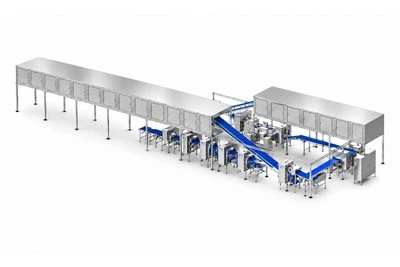
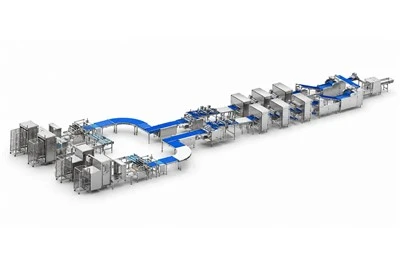
In a Croissant Production Line, the dough passes through multiple processing stages:
Dough Mixing → Fat Lamination → Folding → Chilling → Sheeting → Cutting & Forming → Proofing → Baking
Each stage influences the final structure.
Excessive pressure during sheeting may damage the layers. Poor temperature control can soften the fat, while insufficient proofing may leave the dough without enough expansion capacity.
Even if one stage performs well, inconsistent processing elsewhere can affect the finished croissant.
How Can Manufacturers Improve the Structure?
Start by controlling the relationship between dough and fat consistency. Both materials need compatible plasticity to form continuous layers during lamination.
During sheeting, reduce thickness progressively instead of applying excessive pressure.
Allow sufficient dough relaxation when resistance becomes noticeable, and maintain suitable temperature conditions throughout processing.
Proofing should be evaluated by dough expansion and condition rather than time alone.
Finally, the baking profile must provide sufficient heat for expansion while allowing the interior to bake properly.