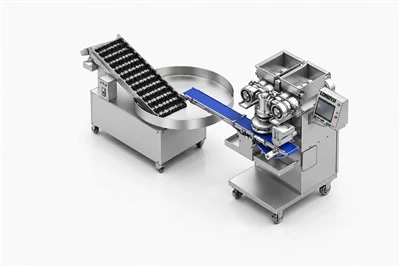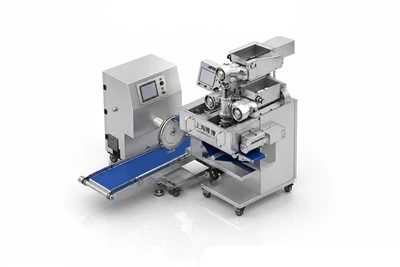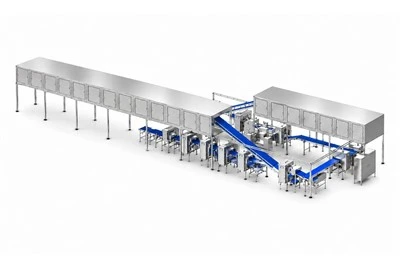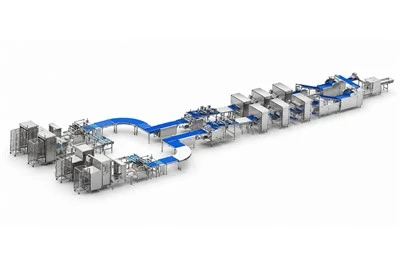

A Mantou production line is an automated processing system that utilizes cutting-edge technologies-such as biomimetics, optical sensing, electromagnetic induction, steam technology, programmable microcomputer control, far-infrared technology, and human-machine interfaces (HMI)-to execute the entire sequence of Mantou (steamed bun) production. This includes automatic dough mixing, continuous sheeting, rolling, extrusion, quantitative cutting, shaping, proofing, and steaming.
The line is operated and controlled via an HMI, digital display systems, and a PLC-based touchscreen interface. It employs processes such as dual-stage sheeting and dough-strip rolling to preserve the integrity of the gluten network, effectively simulating the manual shaping process of traditional Mantou.
The production line offers a wide capacity range; depending on the model, it can produce between 500 and 13,000 Mantou per hour, with adjustable product weights ranging from 30 to 250 grams. Food-contact components are typically constructed from high-quality stainless steel. The equipment features precise weight control and supports the production of various items, including knife-cut Mantou, round Mantou, and specialty shaped steamed buns.
Widely used in central kitchens, large-scale food enterprises, grain processing plants, food factories, catering businesses, and small-to-medium-sized flour product workshops, this production line is essential equipment for achieving large-scale, standardized Mantou production, enhancing efficiency, and reducing labor costs.