
Meatballs are a traditional Chinese delicacy; traditionally, they were made by manually pounding and chopping meat into a paste. With the rapid population growth in modern times, the demand for meatballs surged beyond the capacity of traditional manual methods, prompting the development of machinery to replace manual labor. The earliest processing equipment was the meat grinder, which broke meat chunks into granules, replacing the manual steps of slicing, shredding, and dicing.
With the widespread adoption of electric motors, the single-barrel high-speed meatball beater/mixer emerged; it not only handled the "chopping" stage but also integrated the processes of mixing ingredients and breaking down meat chunks. Subsequently, to accommodate various meat textures and processing requirements, product lines such as the XSQ series (dual-barrel beaters), MQ series (slow-speed beaters), and TS series (programmable variable-frequency beaters) were developed.
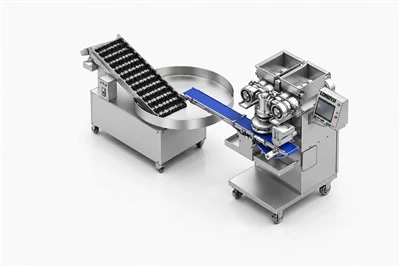
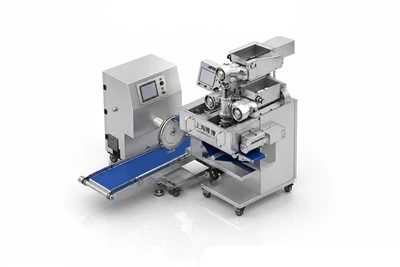
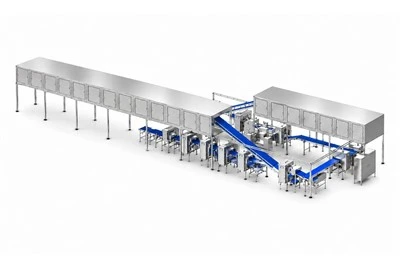
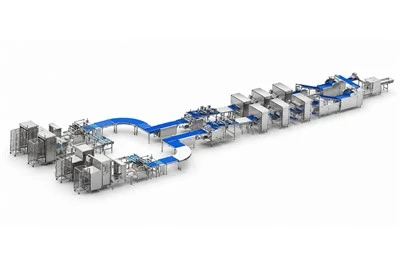
As the production volume of meatball beaters increased, manual meatball forming became a bottleneck for business growth. Consequently, the industry developed various forming machines, including rapid meatball formers, *Gongwan* (premium meatball) formers, filled-meatball machines, and hot-pot meatball forming lines. The evolution of the filled-meatball machine is particularly illustrative: the first generation, dating back to 2005, was primarily constructed from magnetic 430 stainless steel, utilized belt-expansion pulleys and gears for transmission, and employed a connecting-rod injection method for forming. The second generation, introduced and named in 2012, utilized high-quality 304 stainless steel, replaced belt-expansion pulleys with a chain-and-gear drive system, incorporated an oil-line lubrication system, and adopted a constant-speed cutting method for the first time. The third generation debuted in late October 2014; building upon the second generation, it optimized and accelerated the forming and cutting sections, replaced the plastic screw cap on the filling control with a specially treated, oxidation-resistant stainless steel cap, added an auger baffle to the filling hopper, and installed lubrication drip tubes on the forming rotary gears. With the resolution of the meatball forming issue, the subsequent need to set and cook the meatballs led to the development of complementary equipment, such as automatic boiling tanks, medium-to-high-temperature setting and cooking lines, and cooling lines. By the end of 2013, the concept of an integrated meatball production system was introduced, combining processes ranging from raw material feeding, grinding, and paste preparation to forming, cooking, cooling, and even packaging.